
How we built this comparison
This page combines traveler discussion patterns, published price ranges, flight schedules, and seasonal data to help you decide between Mexico City and Buenos Aires.
- Reviewed Reddit threads from r/travel, r/solotravel, r/mexicocity, r/buenosaires, and r/digitalnomad.
- Verified costs and logistics against current booking platforms (booking.com, Google Flights, Numbeo, local transport sites).
- Cross-referenced seasonal patterns and weather data with long-term climate statistics.
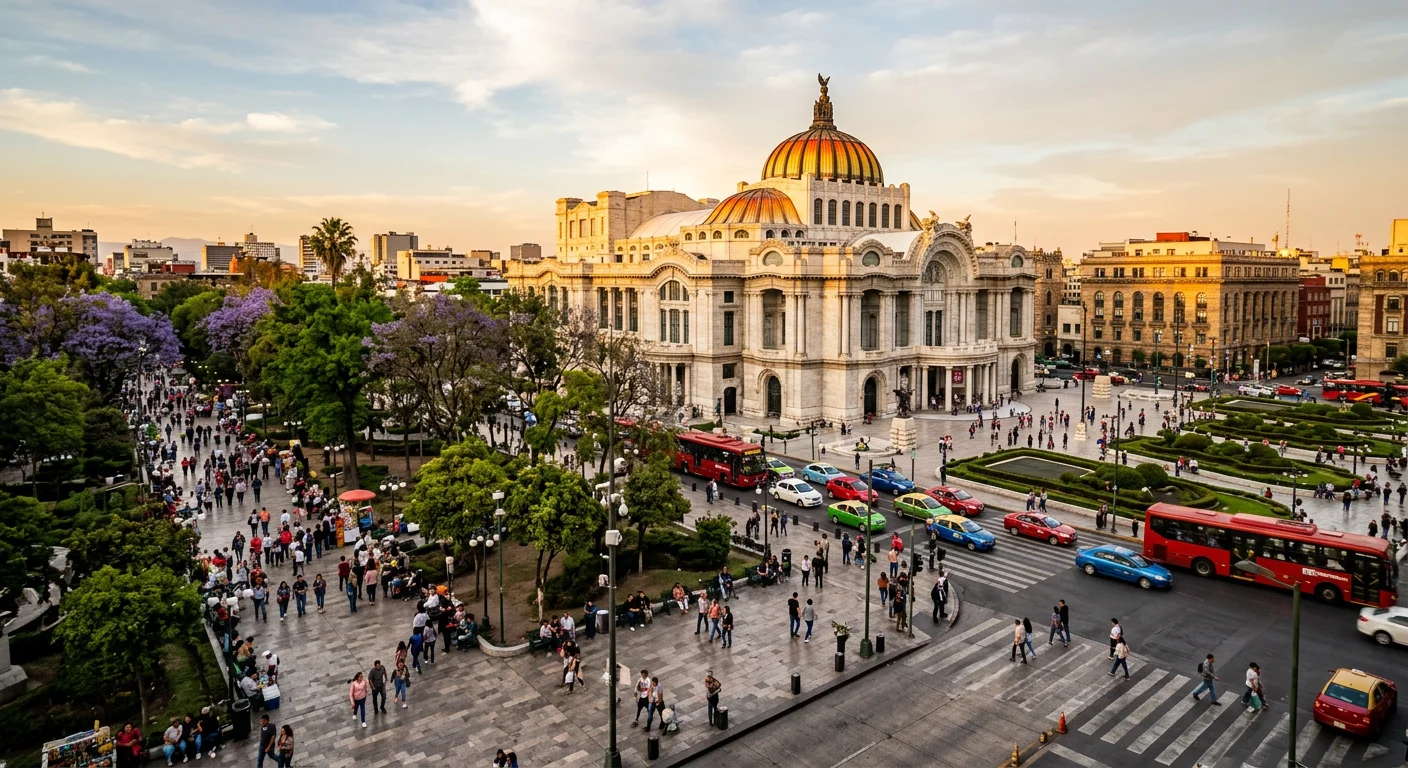
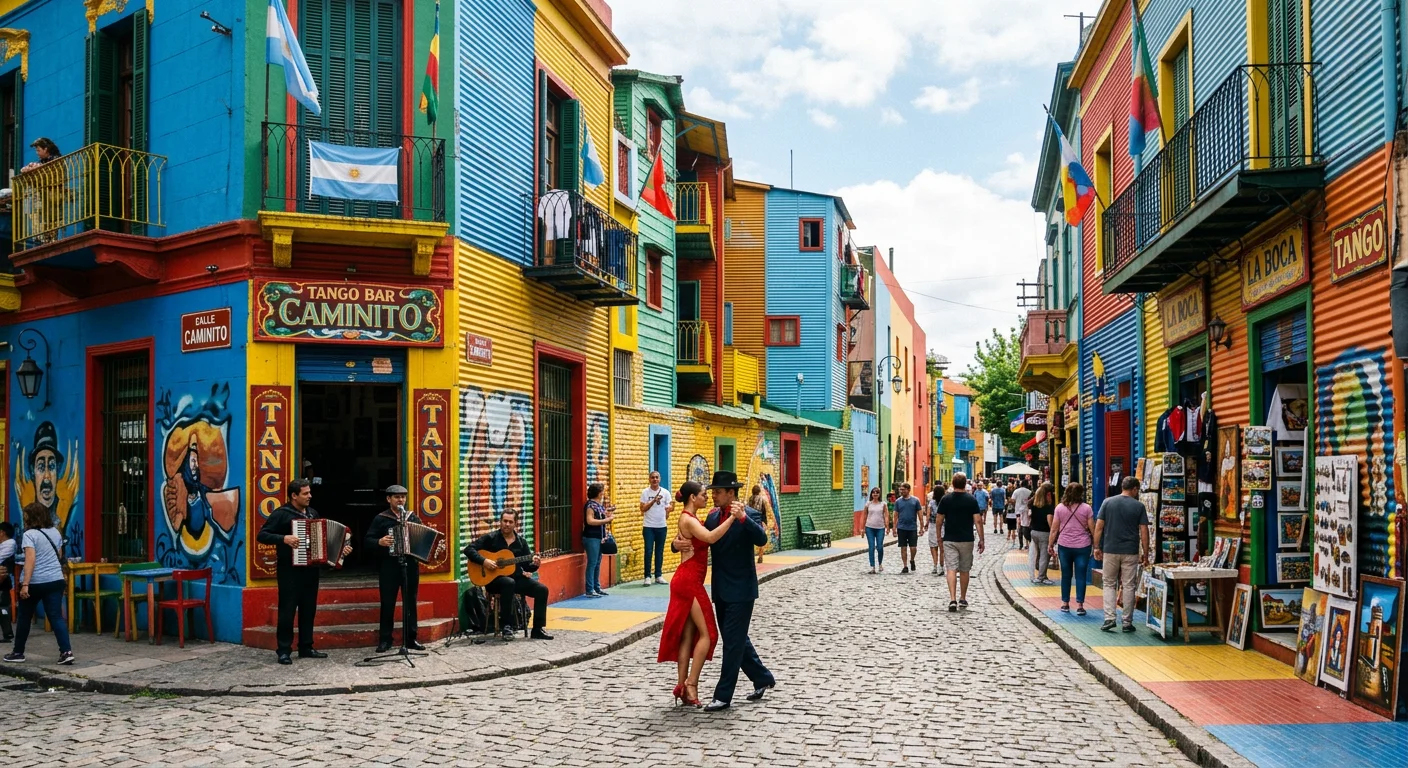
⚡ Quick Answers
⚡ The TL;DR Verdict
For most first-time travelers prioritizing ease of travel, varied food, and a more accessible price point, Mexico City comes out ahead. Budget travelers will find their money stretches further there, often $40-80 per day. Buenos Aires suits those seeking a distinct European influence, a focus on specific culinary experiences like steak and wine, and a later nightlife, typically $30-70 per day for a budget trip.
- Choose Mexico City: Pick Mexico City if you want a destination with incredible street food diversity, pre-Hispanic and colonial history, efficient public transport, and a generally lower price tag for everyday expenses and activities.
- Choose Buenos Aires: Choose Buenos Aires for its European architecture, tango culture, steak and wine, late-night social scene, and a slightly more relaxed pace once you adjust to its rhythm. It caters well to travelers seeking a distinctly South American European feel.
- Choose Both: Consider visiting both if you have at least three weeks of travel time and want to experience the breadth of Latin American urban life, contrasting Mexican energy with Argentinian elegance. This requires a significant travel day between them.
📊 Visual Scorecard
🌤 When to Visit
Average high temperatures (°C). Green = best months, orange = avoid.
Quick Comparison
| Category | Mexico City | Buenos Aires | Winner |
|---|---|---|---|
| Food & Drink | Unmatched street food, diverse regional cuisine, global dining options. | Steak, empanadas, Italian influence, coffee culture, late dinners. | Mexico City |
| Culture & History | Pre-Hispanic, colonial, and modern layers; extensive museums, public art. | European architecture, tango, literature, political history, grand theaters. | Mexico City |
| Nightlife | Rooftop bars, mezcalerias, clubs in Roma/Condesa, late-night street food. | Very late start, speakeasies, tango shows, electronic music clubs, Palermo bars. | Buenos Aires |
| Costs & Budget | Generally affordable, especially for food and public transport. | Can be very cheap due to inflation, but high-end can be comparable. | Mexico City |
| Getting There & Around | Many direct flights, efficient metro, ride-sharing apps. | Fewer direct flights from North America, extensive bus network, Subte. | Mexico City |
| Accommodation | Diverse options, good value in central neighborhoods. | Boutique hotels, hostels, apartments in Palermo/Recoleta. | Mexico City |
| Day Trips | Teotihuacan, Cholula, Puebla, monarch butterfly sanctuaries. | Colonia del Sacramento (Uruguay), Tigre Delta, Estancias. | Mexico City |
| Weather & Seasons | Mild year-round due to altitude, distinct dry and rainy seasons. | Four distinct seasons, hot summers, mild winters. | Mexico City |
| Safety | Generally safe in tourist areas, awareness of surroundings needed. | Generally safe, petty crime common, protests can occur. | Tie |
| Digital Nomad Appeal | Excellent WiFi, many co-working spaces, affordable cost of living. | Good cafes for working, strong expat community, more pronounced seasons. | Mexico City |
🌮 Food & Drink
Mexico Citys food scene is expansive, offering everything from twenty-peso street tacos to high-end tasting menus. You can eat incredibly well and affordably, with three street…
Mexico Citys food scene is expansive, offering everything from twenty-peso street tacos to high-end tasting menus. You can eat incredibly well and affordably, with three street tacos at El Califa or El Huequito costing around $3-5 (60-100 MXN). Upscale dining at Pujol or Quintonil will set you back $150-300+ (3000-6000+ MXN) per person. Local markets like Mercado de San Juan offer exotic meats, while Mercado Roma provides a curated food hall experience. Mezcal bars are popular, and craft beer is gaining traction.
Buenos Aires centers its culinary identity around beef, specifically parrillas (steakhouses) like Don Julio where a large steak can cost $30-50 (30,000-50,000 ARS), though local spots are cheaper. Empanadas and dulce de leche are staples. There is a strong Italian influence seen in pasta and pizza options. Coffee culture is strong, with many cafes suitable for working or relaxing. Dinner often starts late, around 9 PM or 10 PM. Wine, especially Malbec, is cheap and high quality. Mexico City wins for sheer variety, accessibility, and unique flavors.
🏛️ Culture & History
Mexico City holds the distinction of being built on an ancient Aztec capital, Tenochtitlan. This layering creates a tangible connection to history everywhere, from the Templo…
Mexico City holds the distinction of being built on an ancient Aztec capital, Tenochtitlan. This layering creates a tangible connection to history everywhere, from the Templo Mayor ruins in the Zocalo to the Palacio Nacional murals by Diego Rivera. The city hosts over 150 museums, including the Museo Nacional de Antropologia ($10/200 MXN entrance) and Museo Frida Kahlo ($15/300 MXN, book ahead). There are numerous pre-Hispanic sites like Teotihuacan a short bus ride away ($4/80 MXN). Public art is prevalent, and weekly free events like Sunday bici-ruta are common.
Buenos Aires presents a distinct European atmosphere with its Belle Époque architecture, particularly in neighborhoods like Recoleta and San Telmo. The city is the birthplace of tango; you can find milongas (tango dance halls) nightly, with lessons costing around $10-20 (10,000-20,000 ARS). The Colon Theater is a historical opera house offering tours for about $20 (20,000 ARS). Historical sites often relate to political movements and figures like Evita Peron. While Buenos Aires offers a deep dive into its unique cultural blend, Mexico Citys immense historical depth and range of periods are unmatched. Mexico City takes this category for its profound historical layers and extensive cultural institutions.
🕺 Nightlife
Mexico Citys nightlife usually starts earlier, around 9 PM or 10 PM. Neighborhoods like Roma Norte and Condesa are popular for bars and clubs, with places like Gin Gin offering…
Mexico Citys nightlife usually starts earlier, around 9 PM or 10 PM. Neighborhoods like Roma Norte and Condesa are popular for bars and clubs, with places like Gin Gin offering craft cocktails around $10-15 (200-300 MXN). Polanco has more upscale options. Mezcal bars are common for sampling spirits, and you can always find late-night street food, often until 2 AM or 3 AM. The city has a good selection of live music venues and smaller dance clubs.
Buenos Aires nightlife starts very late, often not picking up until past midnight and continuing until 6 AM or later, especially on weekends. Palermo Soho and Palermo Hollywood are dense with bars, pubs, and clubs. Speakeasies are popular, like Floreria Atlantico, with cocktails around $10-15 (10,000-15,000 ARS). Electronic music clubs are prominent. Tango shows, some with dinner, are a distinct evening activity, with full packages costing $70-150+ (70,000-150,000 ARS). The energy and late hours of Buenos Aires nightlife are distinct. Buenos Aires is the winner for its unique and enduring late-night social scene.
💰 Costs & Budget
Mexico City is remarkably budget-friendly. A typical street food meal can cost $2-5 (40-100 MXN), a metro ride is only $0.25 (5 MXN), and a decent local beer is around $2-3 (40-60…
Mexico City is remarkably budget-friendly. A typical street food meal can cost $2-5 (40-100 MXN), a metro ride is only $0.25 (5 MXN), and a decent local beer is around $2-3 (40-60 MXN). Mid-range accommodations start from $50-80 USD per night for a private room in a good neighborhood, while hostels are $15-25 USD. A comfortable daily budget for a mid-range traveler is $80-150, while budget travelers can manage on $40-80.
Buenos Aires can be very inexpensive due to high inflation and a favorable blue dollar exchange rate, making many local goods and services surprisingly cheap for visitors with USD. A Subte (metro) ride is under $0.10 (80 ARS), and a decent empanada is $1 (1000 ARS). Mid-range accommodation might range from $40-70 USD, with hostels around $10-20 USD. However, imported goods and certain high-end experiences can still be costly. A comfortable daily budget for a mid-range traveler is $70-130, and budget travelers can get by on $30-70. Mexico City is more predictable and consistently affordable across the board, avoiding the currency exchange complexities of Argentina. Mexico City provides a more consistent and transparent budget experience.
✈️ Getting There & Around
Flying to Mexico City is generally easier from North America. Direct flights from major US hubs like New York (JFK) take about 5.5-6 hours, and from Los Angeles (LAX) about 3.5-4…
Flying to Mexico City is generally easier from North America. Direct flights from major US hubs like New York (JFK) take about 5.5-6 hours, and from Los Angeles (LAX) about 3.5-4 hours. The Benito Juarez International Airport (MEX) is well-connected to the city center via metro, metrobús, and authorized taxis/ride-shares (Uber/DiDi are active). Within the city, the metro is very efficient and cheap at 5 MXN ($0.25). Buses and colectivos fill in gaps. Traffic can be heavy but public transport handles volume well.
Getting to Buenos Aires from North America usually involves a longer journey. Direct flights from New York (JFK) are around 10.5-11 hours, and from Los Angeles (LAX) usually require a stop and take 12+ hours. Ezeiza International Airport (EZE) is further from the city, requiring a bus, taxi, or private transfer (about $30-40 USD). Within the city, the Subte (metro) is useful but less extensive than Mexicos. The bus network is comprehensive but requires a Sube card. Ride-sharing apps like Uber and Cabify are available. Mexico City wins for shorter flight times from a major market and a superior public transport network. Mexico City is more accessible and easier to navigate on arrival and within the city.
🏨 Accommodation
Mexico City offers a wide range of accommodation options. In central and desirable neighborhoods like Roma Norte, Condesa, or Juarez, you can find quality boutique hotels for…
Mexico City offers a wide range of accommodation options. In central and desirable neighborhoods like Roma Norte, Condesa, or Juarez, you can find quality boutique hotels for $80-150 USD per night, or well-regarded hostels like Hostal Regina from $20-30 USD. Airbnbs are plentiful and often good value. For luxury, Polanco has high-end chains. Neighborhoods are generally well-defined, making it easy to choose based on your preferences for food, nightlife, or calm. Booking in advance for popular times is advisable.
Buenos Aires has a strong offering of boutique hotels and hostels, particularly in Palermo, Recoleta, and San Telmo. A mid-range hotel might cost $70-120 USD per night, and hostels like Milhouse Avenue are available for $15-25 USD. Apartments are also popular for longer stays. The quality can be high, often with a European aesthetic. Due to economic fluctuations, sometimes rates can be very favorable. However, Mexico City provides more consistent availability and a wider array of choice across price points in attractive, central areas. Mexico City offers a more consistent and better value accommodation market.
🌳 Day Trips
Mexico City has an impressive array of day trip options. The ancient pyramids of Teotihuacan are a recommended, just an hour bus ride away ($4/80 MXN for the bus, $4/80 MXN entrance…
Mexico City has an impressive array of day trip options. The ancient pyramids of Teotihuacan are a recommended, just an hour bus ride away ($4/80 MXN for the bus, $4/80 MXN entrance to site). Puebla and Cholula offer colonial architecture and culinary treats, a 2-hour bus journey ($10-15/200-300 MXN). During winter, the monarch butterfly sanctuaries are a unique experience, albeit a longer trip. Toluca and Taxco are other possibilities for crafts and silver. The variety of historical, natural, and cultural day trips is extensive and easily accessible.
Buenos Aires offers some compelling day trips. Colonia del Sacramento in Uruguay is a popular choice, a UNESCO site accessible by a 1-hour ferry ($50-100 USD round trip). The Tigre Delta, with its network of rivers and islands, offers boat tours and a change of scenery ($5-10 USD for train, $15-30 USD for boat tour). Estancias (ranches) offer a taste of gaucho culture, though these can be more organized and expensive tours. While Colonia is special, Mexico Citys day trip options are more varied and culturally deep, with less international travel involved. Mexico City wins for the number and depth of its day trip options.
☀️ Weather & Seasons
Mexico City, due to its altitude (2,240m), maintains a relatively mild climate year-round. Temperatures rarely drop below 7°C (45°F) in winter or exceed 27°C (80°F) in summer. The…
Mexico City, due to its altitude (2,240m), maintains a relatively mild climate year-round. Temperatures rarely drop below 7°C (45°F) in winter or exceed 27°C (80°F) in summer. The dry season (November to April) is sunny and pleasant, with clear skies. The rainy season (May to October) brings afternoon showers, which can be heavy but typically short-lived, clearing up for evenings. This predictable pattern allows for good planning, and cooler evenings are common. Layering clothing is always a good idea.
Buenos Aires experiences four distinct seasons. Summers (December to February) are hot and humid, often reaching 30-35°C (86-95°F), with occasional thunderstorms. Autumn (March to May) and spring (September to November) are generally mild and pleasant, with temperatures around 18-25°C (65-77°F). Winters (June to August) are mild, with average temperatures around 10-15°C (50-60°F), rarely dropping below freezing. While Buenos Aires seasons have their charm, Mexico Citys year-round mildness makes it a more consistently comfortable destination for sightseeing. Mexico City is the winner for its consistently mild and comfortable climate.
🚨 Safety
Mexico City has a reputation that sometimes precedes it, but in tourist-heavy areas like Roma, Condesa, Polanco, and Juarez, it is generally safe, especially during the day. Petty…
Mexico City has a reputation that sometimes precedes it, but in tourist-heavy areas like Roma, Condesa, Polanco, and Juarez, it is generally safe, especially during the day. Petty crime like pickpocketing can occur, particularly in crowded markets or on the metro. It is advisable to avoid walking alone late at night in less-trafficked areas and to use ride-sharing apps (Uber/DiDi) after dark. Basic precautions like not displaying expensive items and keeping valuables secure are important. Local taxis should be authorized.
Buenos Aires is also generally considered safe for tourists, particularly in popular neighborhoods like Palermo, Recoleta, and San Telmo. Petty theft, including phone snatching and pickpocketing, is common, especially in crowded areas like La Boca or on public transport. Fake taxi scams exist; it is best to use radio taxis or ride-sharing apps. Protests and demonstrations can occur, sometimes closing streets, so checking local news is wise. Both cities require a similar level of situational awareness and common-sense precautions. Both cities require travelers to exercise similar levels of caution and awareness.
🛡 Dig deeper: Mexico City scam guide · Buenos Aires scam guide
💻 Digital Nomad Appeal
Mexico City has become a major hub for digital nomads. The internet infrastructure is robust, with reliable high-speed WiFi widely available in cafes, co-working spaces (e.g.,…
Mexico City has become a major hub for digital nomads. The internet infrastructure is robust, with reliable high-speed WiFi widely available in cafes, co-working spaces (e.g., WeWork locations), and apartments. The cost of living is appealing, allowing for a comfortable lifestyle on a moderate budget; rent for a one-bedroom in Roma Norte can be $700-1200 USD. The culinary scene and ease of getting around contribute to a positive experience. The community is large and well-established, offering many networking opportunities. Visas for longer stays are also relatively straightforward.
Buenos Aires also draws digital nomads, though perhaps not as intensely as Mexico City. The cafe culture is strong, providing many comfortable spots to work (e.g., Full City Coffee House). Internet speeds are generally good. Rent in Palermo can range from $600-1000 USD for a one-bedroom. The expat community is sizable. However, the economic instability and fluctuating currency in Argentina can create some logistical challenges, especially regarding banking and payment. While Buenos Aires is good, Mexico City wins for its stability, established infrastructure, and general ease of life for long-term stays. Mexico City offers a more stable and established environment for digital nomads.
🎯 The Decision Framework
Choose Mexico City If…
- You want street tacos for $2 at any hour of the day.
- You are interested in ancient Aztec history and colonial architecture.
- You prefer a destination with consistently mild weather year-round.
- You value efficient and affordable public transportation.
- You want quick, direct flights from most North American cities.
- You enjoy exploring diverse neighborhoods like Roma, Condesa, and Coyoacan.
- You appreciate extensive museum options, many free or low cost.
- You are a digital nomad seeking a stable, affordable, and well-connected hub.
Choose Buenos Aires If…
- You seek a city with distinct European architecture and flair.
- You want to experience tango in its birthplace, from shows to milongas.
- You are a fan of high-quality steak, malbec wine, and late-night dining.
- You enjoy a nightlife that kicks off after midnight.
- You are comfortable navigating currency complexities for potentially greater savings.
- You prefer a city with distinct seasons, including a mild winter.
- You enjoy long walks through grand boulevards and parks like Palermo Bosques.
- You appreciate a strong cafe culture for working or socializing.
📅 Sample Itineraries
Weekend in Mexico City (3 Days)
💡 Purchase a CDMX Metro card for 15 pesos (less than $1) and load it up for easy and cheap transport (5 pesos per ride).
Weekend in Buenos Aires (3 Days)
💡 Use a SUBE card for public transport; it's essential for getting around cheaply and can be purchased at kiosks for around $3.
One Week in Mexico City (7 Days)
💡 Many museums offer free entry on Sundays, plan accordingly to save on admission fees for places like the National Museum of Anthropology.
One Week in Buenos Aires (7 Days)
💡 Take advantage of 'happy hour' at many bars in Palermo from 6-9 PM for 2-for-1 drinks, saving on evening costs.
❓ Frequently Asked Questions
Which city is cheaper for a two-week trip?
Mexico City is generally more consistently affordable. A mid-range traveler might spend $1500-2000 USD for two weeks in Mexico City, whereas Buenos Aires could be $1300-1800 USD with careful use of the blue dollar exchange, but potentially more unpredictable depending on inflation and how you manage currency.
What is the typical flight time from the US to each city?
From major US hubs like New York or Los Angeles, direct flights to Mexico City average 4-6 hours. Flights to Buenos Aires are significantly longer, typically 10.5-12 hours for direct routes, and often involve a layover which extends travel time considerably.
Which city has better public transportation?
Mexico City has a more extensive and efficient public transportation system, particularly its Metro, which covers much of the city at a cost of only 5 MXN ($0.25). Buenos Aires has a good Subte (metro) and bus network, but it is less comprehensive and requires a Sube card for use.
Is it easy to get around by walking in either city?
Both cities offer walkable neighborhoods. In Mexico City, areas like Roma, Condesa, and Coyoacan are pleasant for walking. Buenos Aires, especially Palermo and Recoleta, has wide boulevards and parks that are good for walking. For longer distances, both cities require public transport or ride-shares.
Which city is better for solo female travelers?
Both cities are generally safe for solo female travelers with common-sense precautions. Sticking to well-trafficked, known tourist areas and using ride-sharing services at night is advisable in both. Many travelers report feeling comfortable exploring both Mexico City and Buenos Aires independently.
How much Spanish do I need for each city?
While Spanish is the official language in both, you can often find English speakers in tourist areas and hotels. However, knowing basic Spanish phrases will significantly improve your experience in both cities, especially for ordering food, using public transport, and interacting with locals outside of tourist hotspots.
What is the currency situation in Buenos Aires?
Argentina experiences high inflation, and there is an unofficial 'blue dollar' exchange rate that offers significantly more pesos per USD than the official rate. Travelers often bring USD cash and exchange it at cuevas (unofficial exchange houses) or via Western Union to maximize their spending power. This requires some planning but can make the trip much cheaper.
Which city has more ancient historical sites?
Mexico City offers access to significantly more ancient historical sites. The city itself is built on the Aztec capital of Tenochtitlan, with sites like Templo Mayor downtown. The immense Teotihuacan pyramids are a popular and easily accessible day trip. Buenos Aires does not have comparable ancient sites.
Ready to plan your Latin America trip?
Get a free custom itinerary for Mexico City, Buenos Aires, or both — built from real traveler insights.